facebook twitter
    Home

Habele Blog

An exotic paddling canoe from the remote Pacific Islands of Yap has arrived at Point of Pines, a 17th century plantation on Edisto Island, South Carolina. The native mahogany outrigger will be the first of its kind to enter South Carolina’s coastal waters in over 400 years of recorded nautical history.

A symbol of the longstanding friendship between the United States and the Federated States of Micronesia (FSM), the canoe represents months of painstaking craftsmanship, and centuries of traditional technique. This custom craft was hand built by the master carvers and apprentices with “Waa'gey,” a cultural preservation and mentorship program operating throughout Yap.


The westernmost state in Micronesia, the tiny islands and atolls of Yap are scattered across 500 miles of ocean, just south of the US Territory of Guam. An American protectorate following its liberation in World War Two, Micronesia is now a sovereign nation in a special “Compact” with the US.

Gift of this one-of-a-kind craft was prompted by generous support from private citizens across the United States –and in particular South Carolina– following Super Typhoon Maysak, a record-setting storm that ravaged Yap and Chuuk States in the spring of 2015. Delivery of the donated canoe is being organized by Habele, a South Carolina headquartered charity serving students throughout Yap and across Micronesia. Habele solicited, coordinated and delivered relief supplies to pupils and educators in the wake of the storm.

Matt Coleman, a South Carolina resident who spent a month in Yap coordinating Habele’s efforts, emphasized the significance of the canoe’s arrival. “Americans who may never see the Islands of Yap showed overwhelming generosity in the wake of the storm. These donors aren’t on island to see the transformative impact of their kindness, but they can see this canoe, and know that friendship isn’t something built on proximity.”

For centuries, Micronesians have hand-fashioned canoe keels from mahogany logs. Planks are fitted and tied in with rope made from coconut fibers to complete the watertight sides. These graceful crafts appear symmetrical, with sternposts and stems protruding up from the keel in forks that Islanders liken to lizard tongues. An outrigger steadies the canoe. The contemporary design remains identical to that detailed by Spanish missionaries in the early 1700s, who called the Micronesian canoes “flying proas.”

The canoe’s point of origin and its new berth share historical ties with the Spanish Empire. In 1686, the Islands of Yap were sighted and first claimed as Spanish colony. That same year -over 7,000 miles away- Point of Pines Plantation was burned by Spanish raiders from Florida hoping to expel English colonists from present day South Carolina.

“This canoe is authentic enough for museum display, and functional enough to take shrimping in South Carolina’s tidal creeks,” explained Larry Raigetal of Waa’gey. “It’s made from local materials, with traditional tools, and we are excited about our friends in South Carolina putting it to good use.”

Raigetal’s group was one of many Yap-based organizations who partnered with Habele and other US public and private donors to orchestrate and deliver relief supplies, a process which is still ongoing. Others include Pacific Missionary Airlines (PMA), the Fais Ulithi Ngulu Sorol Organization (FUNSO), as well as Yap State’s own Office of the Governor, Department of Education (DOE) and Sea Transportation Department.

“The partnerships created to support communities’ recovery from the Super Typhoon reflect the foundation of the US-Micronesian relationship: person-to-person connections,” continued Raigetal. “I hope this canoe, perhaps the most powerful symbol of Micronesian culture and tradition, will highlight how much individual Micronesians value those friendships."

Formal dedication and commissioning of the canoe is planned for the spring on Edisto Island.


Share
November 09, 2015 No comments

Today was an exciting day for the 32 Outer Island seniors who determined to finish their final year of high school, despite having been displaced by the violence of Typhoon Maysak. Every one of the seniors completed their classes today, and are ready to graduate!

After the storm destroyed their local high schools, these students were transferred to Yap, where they finished out the school year at the Yap High School campus. Fortunately, the dedicated Peace Corps teachers - Caroline, Tianna, Patrick and John - were able to continue teaching the students who they were formally serving on the Outer Islands. A big thanks to these hardworking teachers who have put so much into the students!

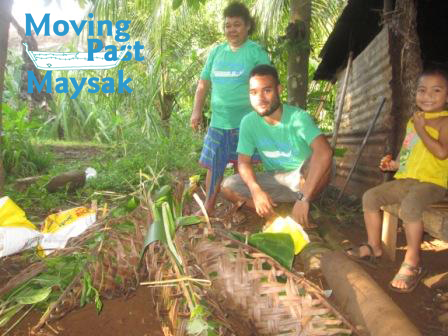
Habele volunteers on Yap were particularly excited to deliver brand new "Moving Past Maysak" shirts to the seniors on their big day. The students were thrilled!


Many thanks to the kind donations of so many Habele donors and volunteers who made this special moment possible. Students were also provided "kits" which included materials for their last weeks of school, as well as personal items such as sandals and toiletries.

On a sobering note, the school year is about to begin again, and students on Ulithi are still without a school. The needs for rebuilding this crucial institution are significant, and your support can help make it possible. Please consider sharing this need with friends and family.

To donate directly to Habele's ongoing work in Moving Past Maysak:
or send check or money order to Habele, 701 Gervais St, STE 150-244, Columbia, SC 29201.
Habele is a tax exempt, all-volunteer, US based nonprofit with a proud history of high impact support for our partners in Micronesia.

Share
June 05, 2015 No comments


Micronesia's remote Outer Islands were fortunate enough to receive emergency supplies of food and water immediately after the destruction of Typhoon Maysak. These rations are crucial for short term survival, but the need to revive traditional, sustainable food sources is an ongoing need.

Volunteers with Waa'gey - a Habele partner organization - have jumped in to help bolster relief work with a long-term food solution for some of Yap State's most isolated Outer Islands.

Drawing on traditional and local knowledge of storm relief, Waa'gey volunteers collected over fifty baskets of traditional crop seedlings, which they will personally deliver to the atolls of Faraulep and Piik. Inside the baskets are over 500 plants, including taro, banana, tapioca, sweet potatoes and even mahogany trees. These are familiar crops, identified by islanders as the most targeted means of helping remote communities regain self-sufficiency.


Faraulep and Piik lie almost 500 miles east of Yap, and suffered 80% loss of food crops and infrastructure to Typhoon Maysak. The majority of this damage was directly from shoreline inundation. Islands and atolls even further east - Satawal, Lamotrek, Elato, Ifalik, Woleai, and Euripik - were fortunate to have avoided the worst of the storm, and sustained considerably less damage.


In addition to delivering plants to the island communities, Waa'gey volunteers will be lending their backs and chainsaws to clearing away the wreckage and debris. Many of these remote islands are confined to the use of the only limited hand tools, as chainsaws simply aren't available. Without the chainsaws and additional manpower, the task of clearing space to plant traditional food plots would be extremely daunting.


To donate directly to Habele's ongoing work in Moving Past Maysak:

or send check or money order to Habele, 701 Gervais St, STE 150-244, Columbia, SC 29201.
Habele is a tax exempt, all-volunteer, US based nonprofit with a proud history of high impact support for our partners in Micronesia.

Share


May 13, 2015 No comments
Lagoon in Ulithi Atoll. 

Habele donors and volunteers often ask questions about the daily lives of the people who live thousands of miles away in beautiful Micronesia. Go here to read, "Where is Micronesia?"

The Outer Islands of Yap provide a fascinating look into traditional island culture and lifestyle. Even today, many remote islands and atolls live in much the same way as they have for millenia.

Villages

Outer Islanders live in small villages facing the calm waters of the atoll’s lagoon. The lagoon provides a shallow, safe location for washing, swimming, gathering fish and shellfish, and launching canoes. This is an extremely valuable feature, considering that these tiny strips of land are surrounded by millions of square miles of some of the deepest water on Earth!
Off the beach, extended families live in houses that were traditionally constructed of hand-carved timbers and leaf thatching. Depending on its size, a family may occupy a small cluster of houses,  and have a separate shed-like structure for cooking meals and mingling. Islanders sleep in hammocks, or on raised wooden platforms in the house. In recent years, access to concrete and sheet metal has meant many houses are a melding of traditional design, and whatever modern materials are available.

Traditional home on Ulithi
While family units may gather for meals, not everyone sleeps under the same roof. Men and boys regularly spend their evenings in the mens’ house, one of the most traditionally important buildings in a village. This unique structure provides a traditional location for men in the village to eat, sleep, store canoes, and meet to discuss community affairs. Building projects, fishing trips, and project planning - like typhoon recovery - would be laid out by community leaders in the mens’ house. Mens’ houses remain strictly segregated. Women have a building of their own that is similarly off-limits to men.

Women on the tiny island of Asor (Ulithi) prepare food in the family cook house
An Outer Islands village like the ones on Ulithi Atoll may include an small elementary school building, a feast hall or meeting house, a church, and a number of sheds for the storage of food and fuel.

Food

Outside the main village are areas designated for growing food. Most of these  growing plots are located near the center of the island, and used for the cultivation of taro plants. Taro grows in swampy, low-lying areas, and produces a starchy stem and edible leaf that are a staple food source for island communities. Other regularly produced crops are coconuts, breadfruit, and bananas. The thin, nutrient-poor soil makes the regular production of many species of plant almost impossible. Outer Islands like those in Ulithi Atoll lost their taro patches and fruit bearing trees in Typhoon Maysak. Some families may have pigs and chickens that wander the island, although not in large numbers.

Women and children provide the care and labor for taro patches, leaving men in the village to focus on the crucial task of gathering food from the sea. Using hand carved outrigger canoes, Outer Island men paddle through the lagoon to check fish traps, cast nets, and dive to pursue small fish with spears. Larger fish cruise the depths outside of the lagoon, and often the men will paddle beyond the relative safety of the lagoon to bring home large catches for sharing in the village.  Outer Islanders have traditionally been willing to make long, open-ocean voyages in canoes to trade resources with other islands.

More "Islands 101" posts coming soon. If you have friends and family curious about Micronesia, please share with them!

To donate directly to Habele's ongoing work in Moving Past Maysak:
or send check or money order to  Habele, 701 Gervais St, STE 150-244, Columbia, SC 29201.
Habele is a tax exempt, all-volunteer, US based nonprofit with a proud history of high impact support for our partners in Micronesia.

Share

Outer Islanders are famous for using outrigger canoes to travel
fantastic distances across the open ocean. 

May 01, 2015 No comments
The beautiful atoll of Ulithi (Yap State) is a picturesque example
 of one of Micronesia's many Outer Islands

Since Typhoon Maysak ravaged Micronesia, many Habele donors and volunteers to the “Moving Past Maysak” effort have been asking basic questions about this remote and beautiful region. 
Where is Micronesia?
“Micronesia” is an umbrella term for a region in the Western Pacific Ocean. This massive section of the Pacific is over 3 million square miles, with thousands of islands scattered throughout. These islands are grouped together in six different sovereign countries. One of these island nations is the “Federated States of Micronesia,” also referenced as the “FSM.” The term “Micronesia” is most commonly used to refer to the 600 islands and atolls making up the FSM. 


 These islands are themselves grouped into four states: Kosrae, Pohnpei, Chuuk, and Yap. Kosrae is the state furthest to the east (toward Hawaii), with Yap being the westernmost state (closest to the Philipines). Each of these states have distinct cultures, languages, and natural resources.
All of the states are geographically centered around a large - more mountainous - “high island,” with smaller islands and atolls scattered around them. These low-lying coral atolls make up the “Outer Islands” of each state. Much like the states themselves, these extremely remote communities have developed their own cultures, dialects, and subsistence living practices.
More "Micronesia 101" posts coming soon!

Outer Islanders are famous open-water navigators and canoe builders.
Subsistence fishing is a daily practice in Micronesia's Outer Islands.
Share

To donate directly to Habele's ongoing work in Moving Past Maysak:
or send check or money order to Habele, 701 Gervais St, STE 150-244, Columbia, SC 29201.
Habele is a tax exempt, all-volunteer, US based nonprofit with a proud history of high impact support for our partners in Micronesia.
April 29, 2015 No comments

The recovery process from Super Typhoon Maysak will be long and arduous, but residents of Micronesia's Outer Islands are standing strong. Your support has a direct impact on the lives of many islanders who have lost everything!

Earlier this month, the record-breaking storm tore through the isolated Outer Islands, leaving behind the wreckage of homes, community buildings, churches, and schools. Survivors are bravely working to "Move Past Maysak," but many remain without critical supplies. You can read more about the needs of determined Outer Island students here.

Thanks to the generosity of Habele donors and volunteers, some relief boxes have already been making their way to the islands. Can a small box of first aid supplies have an impact on a such a massive scene of devastation? The overwhelming response from our volunteers on the ground is, "Yes!"

For the cost of going out to dinner and a movie with your significant other, you can bring practical, targeted relief to typhoon survivors on Micronesia's Outer Islands.
A donation of just $70 allows Habele's all-volunteer staff to purchase and ship more necessities for islanders who are trying to rebuild shattered communities. Please consider giving, and please share with friends and family. 

Real headway is being made in "Moving Past Maysak," and thanks to your generous donations we can keep moving forward!

To donate directly to Habele's ongoing work in Moving Past Maysak:
or send check or money order to 
Habele, 701 Gervais St, STE 150-244, Columbia, SC 29201
.

Habele is a tax exempt, all-volunteer, US based nonprofit with a proud history of high impact support for our partners in Micronesia.

Share

April 23, 2015 No comments
Older Posts

Search This Blog

Popular

  • Islands 101: Where is Micronesia?
    Islands 101: Where is Micronesia?
    The beautiful atoll of Ulithi (Yap State) is a picturesque example  of one of Micronesia's many Outer Islands Since Typhoon Maysak ravag...
  • Mary Dorothy Alexander Vickers
    Mary Dorothy Alexander Vickers
    Mary Dorothy Alexander Vickers Dorothy “Dot” Vickers, 91, of Winchester, Virginia, passed on to the Lord, August 27, 2013, at Consultant Nur...
  • 2007-08 High School Scholarships Awarded
    2007-08 High School Scholarships Awarded
    (July 31, 2007, Columbia, South Carolina) The Habele Outer Island Education Fund announced today that it is awarding over $3,500 in high sch...
  • Books Headed to Pohnpei, Micronesia
    Books Headed to Pohnpei, Micronesia
    US-based charity “ Habele ” has begun shipping books to the Micronesian island of Pohnpei as part of a statewide public literacy project. Th...
  • Summer Fundraising!
    Habele has kicked off its summer fundraising program with a recent mailing to the Friends of the Ulithian Libraries! These are groups and in...

Labels

Adze Amata Coleman Radewagen Arts and Crafts Aumua Amata Barbara Wavell books Canoe Canoe carving Caroline Islands Chaminade China Chuuk Climate Change COFA Compact Impact Compact of Free Association Culture David Hamon Department of the Interior donation donations Doug Domenech Eagle Engineering eauripik Elato Euripik Extracurricular fais Faith Christian Academy Fans Faraulep FAS federai federated states of micronesia Festival of Pacific Arts 2016 FGC2017 FIRST Global Freely Associated States fsm Guam Habele Habele Outer Island Education Fund Habele Robo League Humanitarian Ifalik Intern Internship Joe Wilson Kolonia Lamotrek Language Larry Raigetal LEAD Libraries literacy Madolenihmw Marshall Islands Marshalls Matson Maysak Micronesia Micronesian Moving Past Maysak navigation News Office of Insular Affairs OIA Outer Islands Outer Islands High School outrigger canoe Pacific Arts Palau Peace Corps Piik pohnpei Power Hawks Proa Public Schools reading Relief Relief Effort Reports Republic of Palau Republic of the Marshall Islands robotics Robots sail sailing Satawal Satowan Scholarships school supplies Second Island Chain Sports Sports Council Star-Advertiser STEM Summer temwen Tomil traditional canoe traditional navigation traditional sailing Typhoon Ulithi VEX Robotics Waa'gey waagey weaving Woleai Woven Fans Yap Yap Catholic High School Yap Games Yap High School Yap Outer Islands Yap Robo League Yap SDA Yap SDA School yap state

Blog Archive

  • ▼  2018 (5)
    • ▼  June (1)
      • Interior Announces Funds to Extend Yap Robotics Le...
    • ►  May (2)
    • ►  March (2)
  • ►  2017 (14)
    • ►  December (1)
    • ►  November (3)
    • ►  September (1)
    • ►  August (1)
    • ►  July (1)
    • ►  May (2)
    • ►  April (2)
    • ►  March (2)
    • ►  January (1)
  • ►  2016 (23)
    • ►  November (3)
    • ►  October (2)
    • ►  August (4)
    • ►  July (2)
    • ►  June (6)
    • ►  May (2)
    • ►  April (3)
    • ►  February (1)
  • ►  2015 (23)
    • ►  December (1)
    • ►  November (2)
    • ►  August (1)
    • ►  July (2)
    • ►  June (1)
    • ►  May (3)
    • ►  April (11)
    • ►  February (2)
  • ►  2014 (7)
    • ►  November (2)
    • ►  October (1)
    • ►  August (1)
    • ►  June (2)
    • ►  January (1)
  • ►  2013 (30)
    • ►  December (1)
    • ►  October (2)
    • ►  September (4)
    • ►  August (1)
    • ►  July (5)
    • ►  May (6)
    • ►  April (2)
    • ►  March (2)
    • ►  February (4)
    • ►  January (3)
  • ►  2012 (30)
    • ►  December (5)
    • ►  November (4)
    • ►  September (1)
    • ►  August (2)
    • ►  July (1)
    • ►  June (3)
    • ►  May (4)
    • ►  April (5)
    • ►  March (1)
    • ►  February (3)
    • ►  January (1)
  • ►  2011 (12)
    • ►  December (1)
    • ►  November (1)
    • ►  October (1)
    • ►  September (2)
    • ►  August (1)
    • ►  July (2)
    • ►  June (1)
    • ►  March (1)
    • ►  February (1)
    • ►  January (1)
  • ►  2010 (16)
    • ►  December (1)
    • ►  October (1)
    • ►  September (1)
    • ►  August (1)
    • ►  July (1)
    • ►  June (3)
    • ►  May (2)
    • ►  April (1)
    • ►  March (1)
    • ►  February (1)
    • ►  January (3)
  • ►  2009 (29)
    • ►  December (3)
    • ►  November (5)
    • ►  October (4)
    • ►  September (3)
    • ►  August (5)
    • ►  July (1)
    • ►  May (1)
    • ►  April (2)
    • ►  March (1)
    • ►  February (2)
    • ►  January (2)
  • ►  2008 (22)
    • ►  November (1)
    • ►  October (1)
    • ►  September (2)
    • ►  July (1)
    • ►  June (2)
    • ►  May (3)
    • ►  April (1)
    • ►  March (4)
    • ►  February (3)
    • ►  January (4)
  • ►  2007 (47)
    • ►  December (3)
    • ►  November (1)
    • ►  October (4)
    • ►  September (4)
    • ►  August (2)
    • ►  July (2)
    • ►  June (6)
    • ►  May (4)
    • ►  April (4)
    • ►  March (8)
    • ►  February (4)
    • ►  January (5)
  • ►  2006 (42)
    • ►  December (5)
    • ►  November (6)
    • ►  October (5)
    • ►  September (4)
    • ►  August (3)
    • ►  July (6)
    • ►  June (6)
    • ►  May (7)
Powered by Blogger.

Categories

Created with by ThemeXpose